
Greenwich County Probate Records
Greenwich Probate Court is district PD54 in the Connecticut Probate Courts system. It handles local probate matters such as estates, trusts, conservatorships, guardianships, name changes, and related filings assigned to the Probate Court system. These records do not appear in the Superior Court civil and family portal unless there is a separate appeal or related civil case.
The official Greenwich Probate Court page links users to statewide probate resources, including case lookup, forms, guides, eFiling, eBilling, and fee tools. Probate access is therefore a two-part path: use the statewide lookup for covered public estate and trust data, then contact the Greenwich court for records that are older, archived, certified, confidential, or not displayed online.
The Greenwich Probate Court source page identifies the local Probate Court district for Greenwich users.
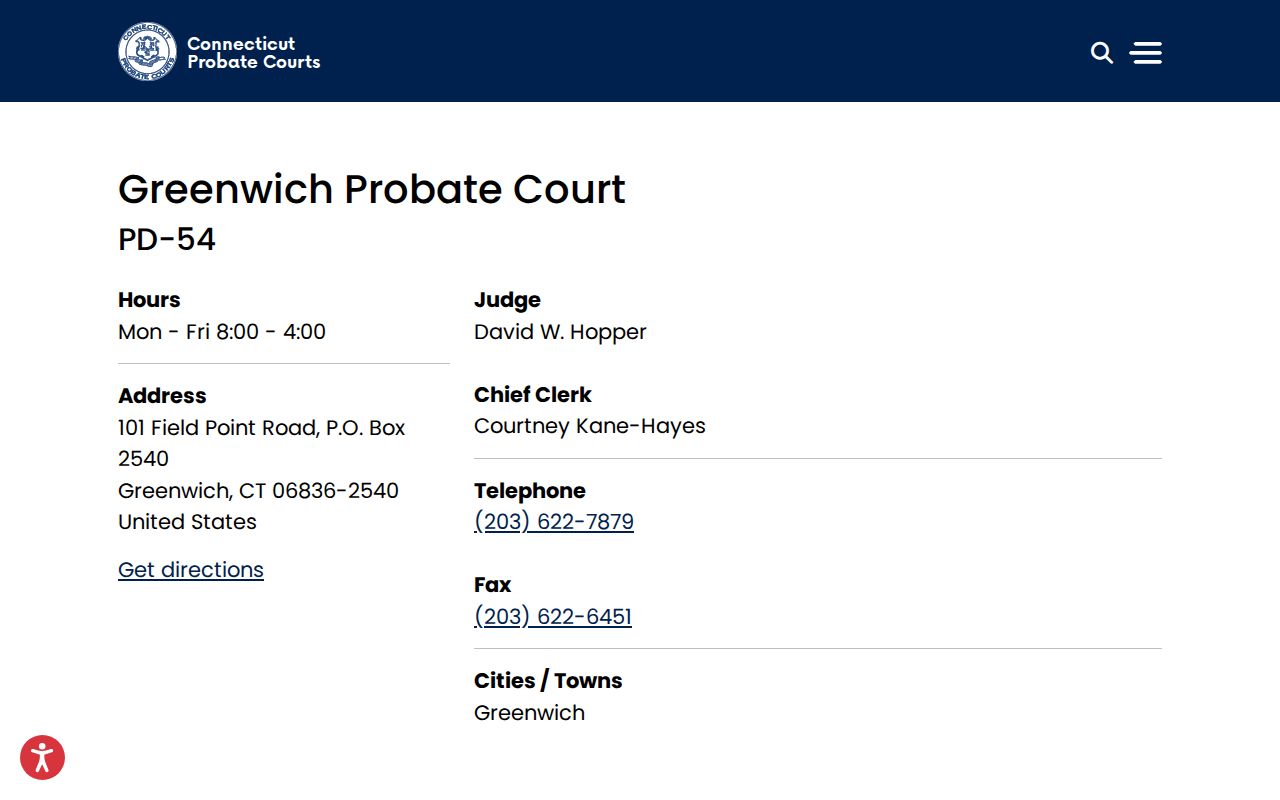
The district page is the right local doorway when the statewide case lookup does not answer a record question.
Greenwich Probate Terms
Probate records use terms that are easy to confuse with general court words. The definitions below match common Connecticut probate usage and help separate estate files from family, civil, and criminal records.
- Testator
- A person who made a will.
- Executor
- The person named to carry out the will and administer the estate.
- Intestate
- A death where the person left no valid will.
- Guardianship
- A Probate Court matter involving legal authority for a minor or another protected person.
- Conservatorship
- A Probate Court matter involving management of personal or financial affairs for an incapable adult.
- Fiduciary
- A person with legal duties for estate, trust, or protected-person property.
Greenwich County Probate Lookup
The Connecticut Probate Case Lookup is the online search channel for covered decedent estate and trust matters. The tool says case data is available from January 5, 2011 to the present for decedent estates and trust cases. Searches may return some pre-2011 matters, but the database is incomplete before that date.
- Open the statewide Probate Case Lookup and choose the case type when known.
- Select PD54 Greenwich Probate Court as the district if the matter is local to Greenwich.
- Use the first and last name fields to narrow a person or case name.
- Review the results for case number, name, and district.
- Select the case number for fiduciary contact information or the district for court contact details when the tool makes those links available.
| Lookup Field | Required | Greenwich Use |
|---|---|---|
| Case Type | No | Choose Decedent's Estate or Trusts when known. |
| District | No | PD54 identifies Greenwich Probate Court. |
| Status | No | Both, Open, or Closed. |
| First Name | No | Helps narrow a person or case name. |
| Last Name | No | Often the main search field for an estate. |
Note: Older Greenwich probate files may require the court or Connecticut State Library because online coverage before January 5, 2011 is incomplete.
Greenwich County Estate Case Types
The probate lookup includes a legend for estate and trust case codes. These codes help explain what the record category means before a user asks for copies or court help. They also prevent a trust search from being confused with a Superior Court civil case or a Town Clerk vital record.
| Code | Probate Case Type | Plain Meaning |
|---|---|---|
| DR | Decedent Estate Regular | Standard estate administration after death. |
| DAT | Decedent Estate Affidavit Estate | Estate handled through affidavit process. |
| DT | Decedent Estate Tax Purposes Only | Estate opened for tax-related purposes. |
| DW | Decedent Estate Will File Only | Will filed without full administration. |
| T, TL, TO, TT | Trust matters | Trust, living trust, other trust, or testamentary trust. |
Greenwich Probate Court Contact
The research identifies Greenwich Probate Court as PD54 and directs users to the Connecticut Probate Court page for court-specific contact details. The statewide lookup can also show court contact information by clicking the district name. Because court hours and direct staff lines may change, the official court page is the proper source for current counter information.
Greenwich Probate Court
District: PD54
Greenwich, Connecticut
ctprobate.gov/courts/greenwich-probate-court
Use the district link in Probate Case Lookup for current court contact information.
Greenwich Probate Forms
Probate filings should use Connecticut Probate Court forms, not Superior Court civil forms and not Town Clerk vital-record forms. The Probate Court forms list organizes official forms by subject, including estates, trusts, guardianships, conservatorships, name changes, and other Probate Court topics. A Greenwich filing should match both the case type and the requested action.
The statewide Probate Court forms list is assigned to Greenwich probate users because local probate forms flow from the Connecticut Probate Court system.
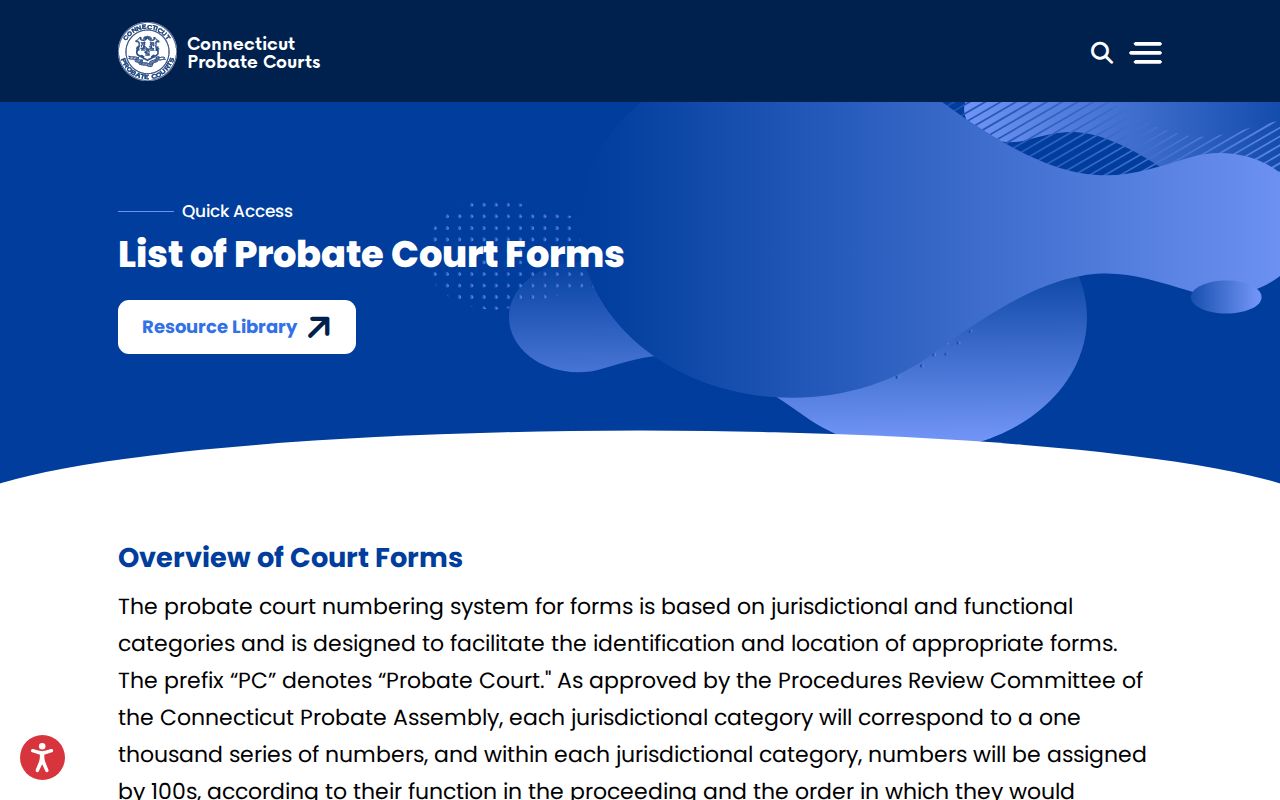
Using the correct Probate Court form reduces delays when the case involves an estate, trust, guardian, conservator, or name-change request.
Greenwich County Probate Fees
Probate fees depend on the type and value of the matter. The research did not provide a flat local fee schedule for every Greenwich probate service, so the safest source is the Connecticut Probate Court's fee and expense calculator page. That source warns that calculator results are estimates and that the court should be contacted for the exact fee in a specific case.
| Fee Topic | Amount | Source Direction |
|---|---|---|
| Decedent estate fees | Estimate only | Use Probate Court fee calculators. |
| Trust matter fees | Estimate only | Confirm with Greenwich Probate Court. |
| Certified copies | Not stated in research | Ask the court for current copy and certification cost. |
| Guardianship or conservatorship filing | Not stated in research | Use current Probate Court instructions before filing. |
The Probate Court fee and expense calculator page is the official estimator source for Greenwich probate fee planning.
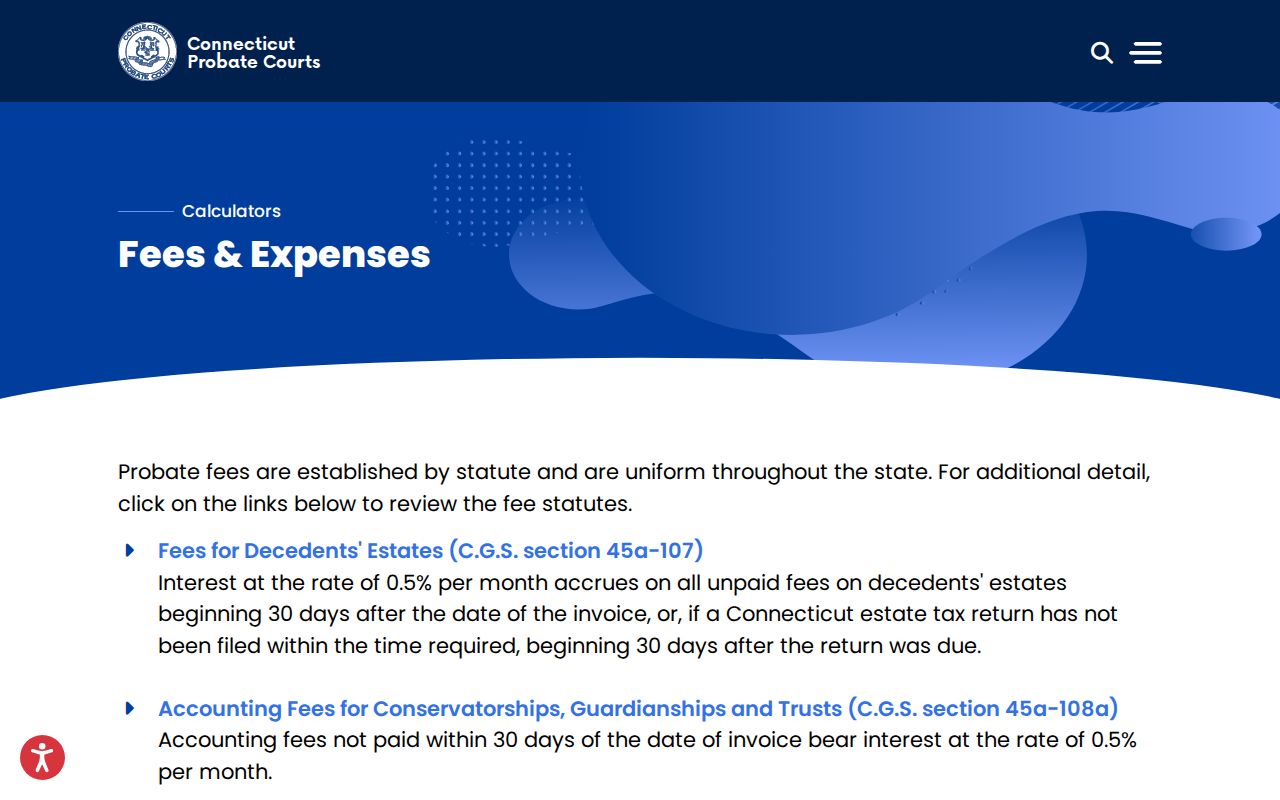
The calculator helps estimate cost, but the court remains the final source for a specific Greenwich probate filing or copy request.
Restricted Greenwich Probate Records
Not every Probate Court file is public online. Estate and trust case data are the strongest public lookup categories documented in the research. Guardianship, conservatorship, mental-health, adoption-related, or protected-person records may have access limits, redactions, or court review. If a result does not appear online, it may be older, outside the lookup category, incomplete in the database, or restricted by law.
For a record that is not visible, identify the person's name, case type, approximate date, and PD54 district connection before contacting the court. A Probate Court appeal, if one exists, may appear in Superior Court systems, but that appeal is not the same as the underlying probate file. Marriage certificates remain with the Town Clerk, and divorce decrees remain with the Superior Court Clerk.
Greenwich probate research should also account for the age of the file. The statewide lookup is complete for covered decedent estate and trust matters only from January 5, 2011 forward. A will filed decades earlier, an old estate account, or an archived fiduciary matter may require court staff direction or Connecticut State Library research. That is an access limit, not proof that no Greenwich probate record exists.
When a certified probate copy is needed, the court can explain whether the item is public, whether a fiduciary or interested-party status must be shown, and which fee applies. A search-result screen is useful for locating the case number, but it is not a substitute for a certified court copy.